
An exploration of place, memory, material and the traces of history
Artists' Residency, Dar Meso, Tunis, Tunisia. September – October 2026
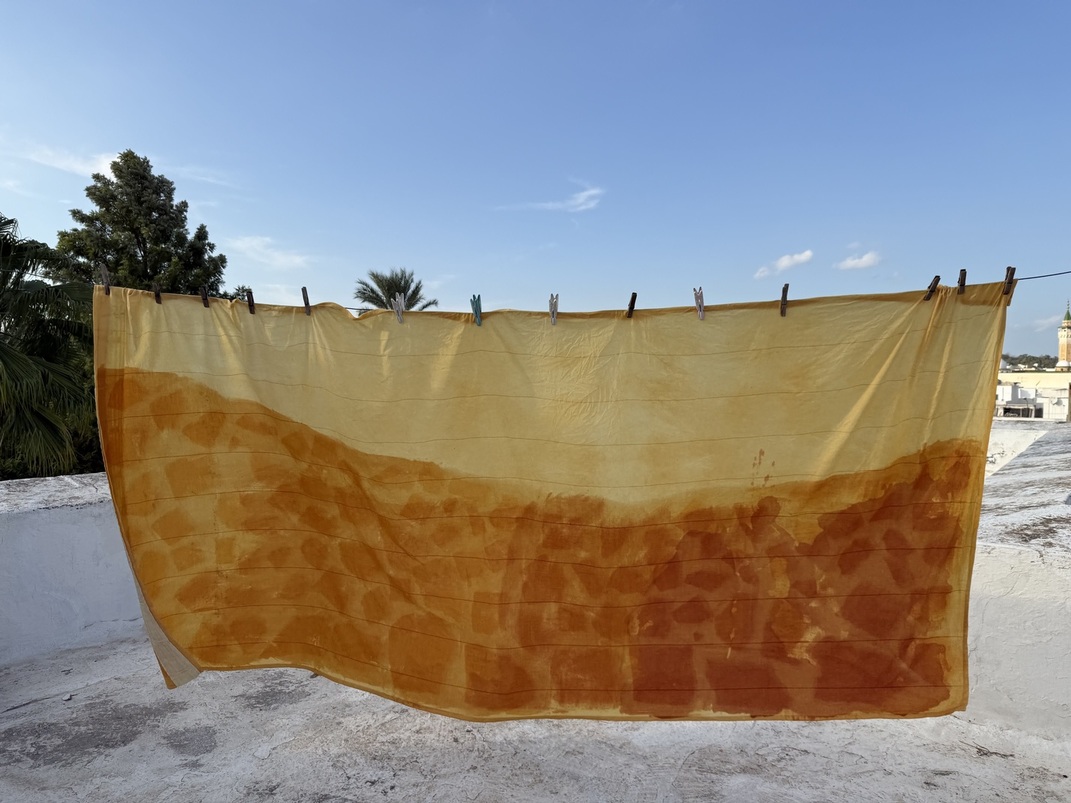
During September and October 2026, I undertook an artists' residency at Dar Meso in Tunis, Tunisia. The residency provided an opportunity to spend time exploring a new environment, engaging with its history and landscape, and developing a body of work through a series of material experiments.
The starting point for this work was an interest in how we experience and interpret landscape, and how something of that experience might be recorded through the physical act of making. Rather than attempting to produce conventional representations of the landscape, I became interested in finding ways of extracting, recording and transforming its physical characteristics. The resulting work developed through two distinct processes: graphite rubbings taken at ancient sites and experimental sun printing using turmeric pigment on cotton.
Both approaches offered different ways of engaging with the physical environment, allowing the landscape to become something that could be transferred, interpreted and reimagined through materials.
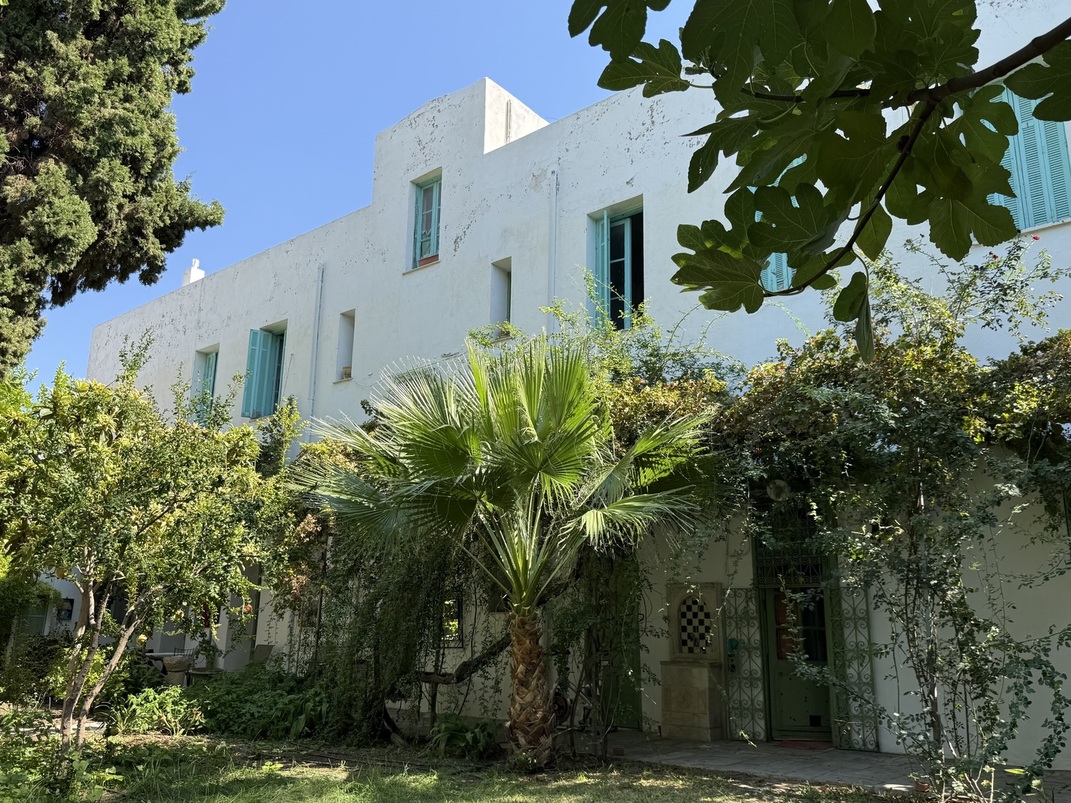
above: Dar Meso, Tunis, Tunisia
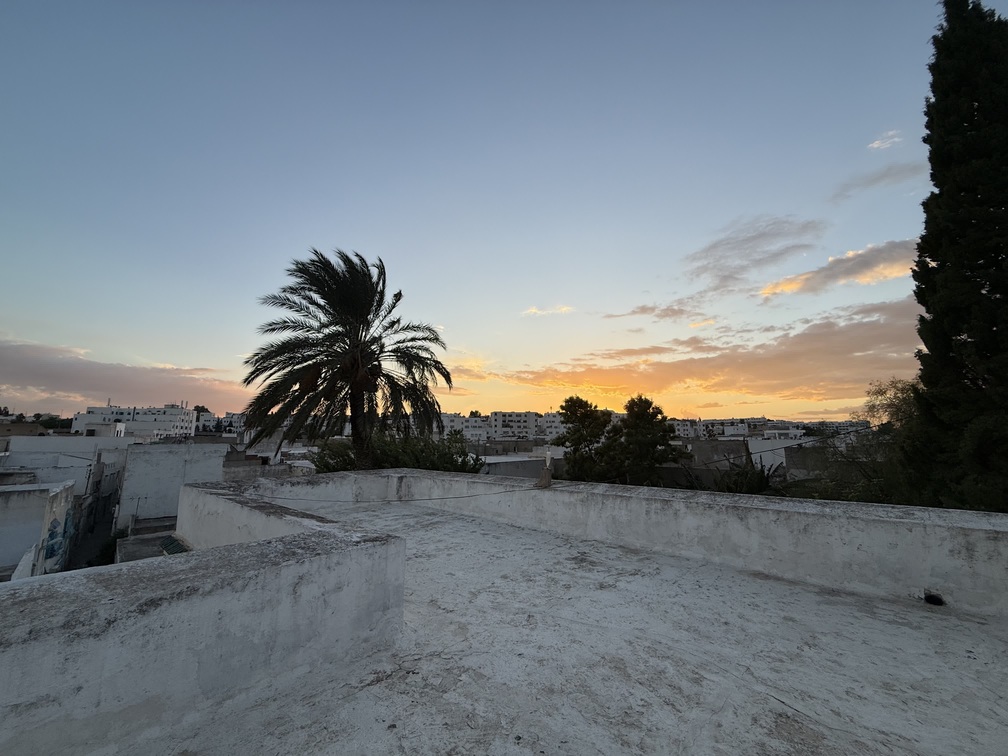
above: view of Tunis from roof top of Dar Meso
Recording the traces of history
An important part of my time in Tunis was visiting ancient sites and spending time observing the surfaces, structures and material qualities of these places. These sites carry evidence of human activity across considerable periods of time. Their surfaces have been shaped by construction, weathering, erosion and the gradual accumulation of history.
I began making rubbings using graphite, working directly with the textures of these ancient surfaces. The process is relatively simple, but the results can be quite revealing. Graphite picks up the subtle variations and irregularities of a surface, recording details that might otherwise go unnoticed.
The resulting rubbings are not drawings in the conventional sense. They are closer to physical impressions or records of an encounter with a particular place. The surface itself determines much of the resulting image, with the graphite acting as a means of transferring its characteristics onto another material.
There is something particularly interesting about this process in relation to the passage of time. The original surface remains in place, carrying its own history, while the rubbing becomes a contemporary record of an encounter with it. The resulting image is both connected to the past and produced in the present.
In this respect, the rubbings become a form of material memory. They carry something of the original location, but are also transformed into independent images that can be moved, arranged and reconsidered elsewhere.
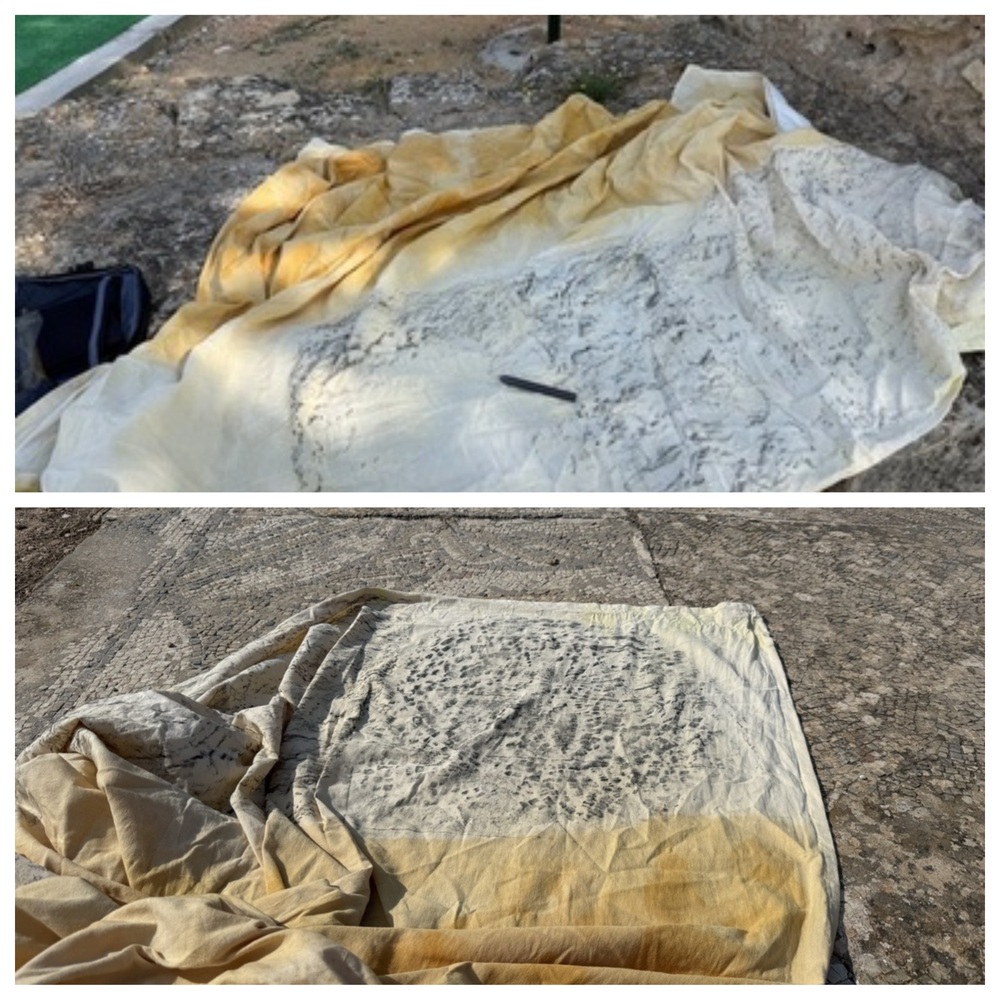
above: making rubbings using graphite stick
Sunlight, turmeric and the photographic image
Alongside the graphite work, I began experimenting with an alternative photographic process using turmeric, isopropyl alcohol, cotton and direct sunlight.
The process involved preparing a solution of turmeric and isopropyl alcohol and applying it to a heavy cotton sheet. An object was then placed directly onto the treated fabric before exposing the whole arrangement to sunlight for approximately three hours.
The object interrupts the light reaching the fabric, creating variations in the resulting image. The process relies on the interaction between the pigment and sunlight, with the exposed and protected areas developing differently.
Following exposure, I washed the fabric in a solution of water and bicarbonate of soda as an attempt to stop the reaction and develop the colour. This produced a striking range of warm amber, ochre and burnt-orange tones.
What initially attracted me to the process was its unpredictability. Unlike conventional photography, where the image is produced through a controlled sequence of chemical and mechanical operations, this approach allows the natural environment to play a much more active role. The intensity of the sunlight, the duration of exposure, the concentration of pigment and the characteristics of the fabric all contribute to the final result.
The resulting images possess an organic quality. They are not entirely photographic, nor are they paintings in the traditional sense. They occupy a space somewhere between the two, with the material itself becoming an important part of the image.
The cotton also introduces an interesting relationship between surface and image. The pigment is absorbed into the fibres, rather than simply sitting on top of the material. This gives the work a tactile quality and a physical presence that is quite different from a conventional photographic print.
The initial results were particularly rich in colour, with deep, saturated orange tones when the fabric was wet. As the cotton dried, however, much of this intensity diminished, revealing a more muted and subtle palette. This became another part of the experimentation, raising questions about the relationship between pigment, material, chemical processes and the permanence of an image.
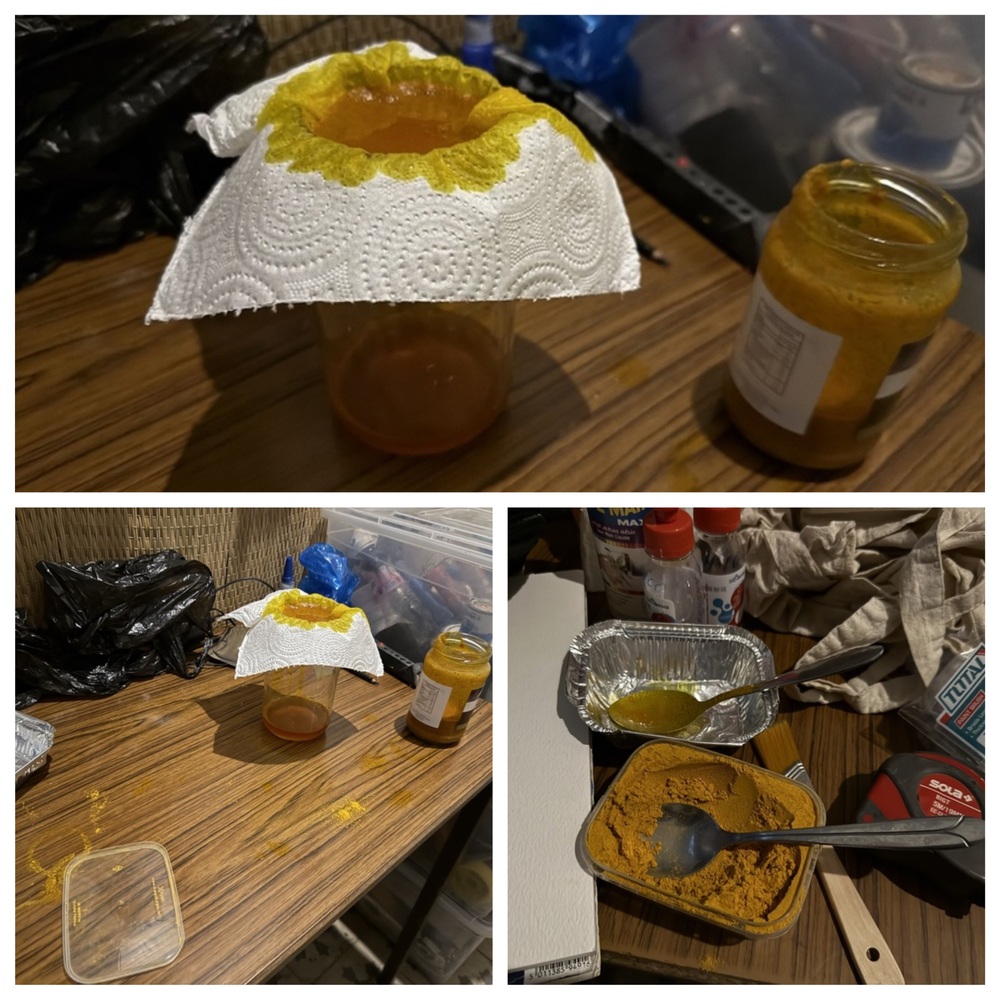
above: mixing and straining the Turmeric and alcohol solution
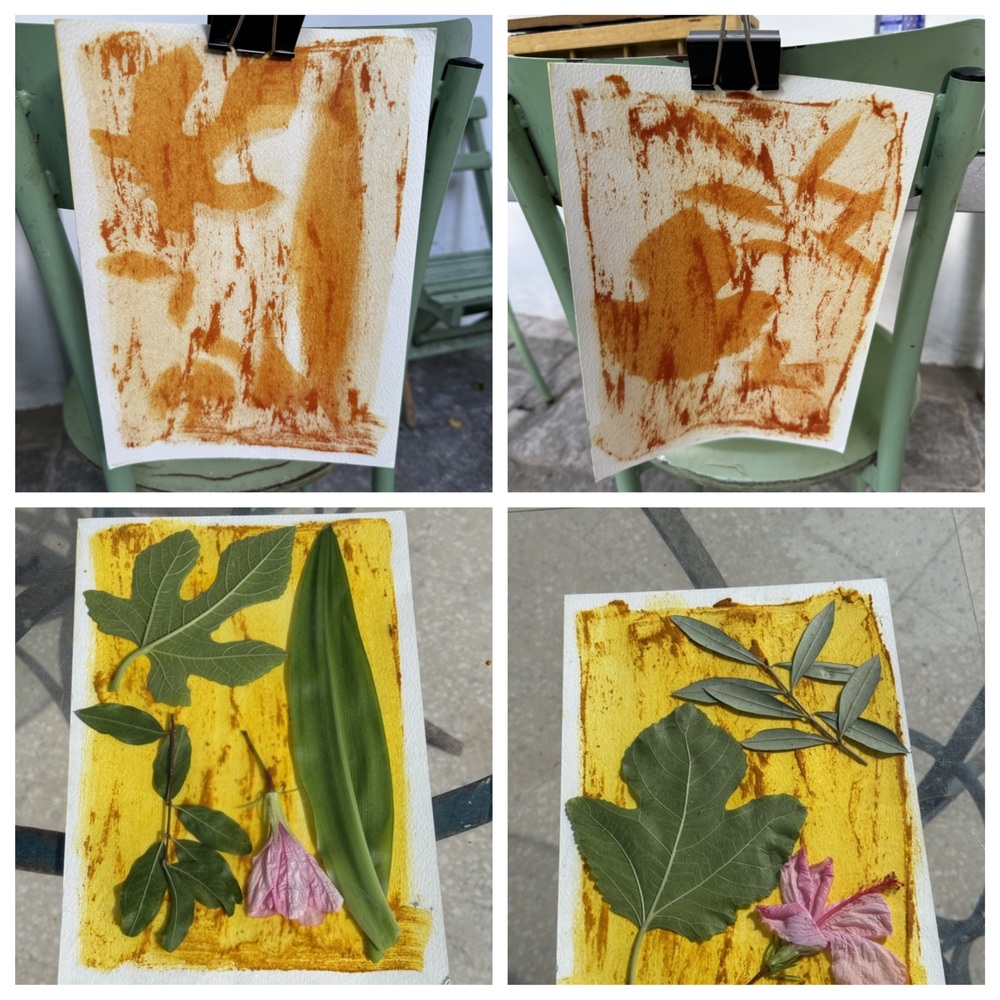
above: very first experiments, exposing to direct sunlight for a few hours
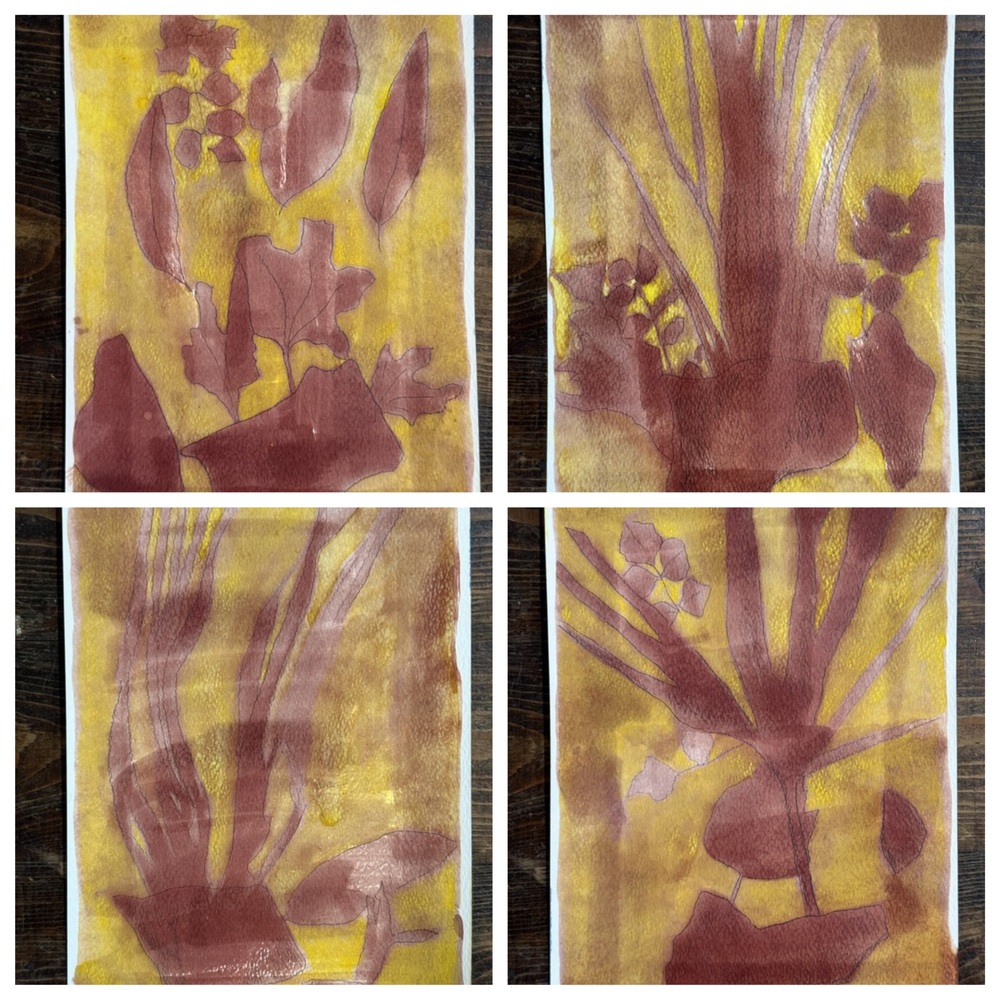
above: another set of experiments with a different solution and a different outcome
Making landscapes from landscape
Although the two processes are quite different, they share a common starting point: the physical experience of being in a particular place.
The graphite rubbings extract the textures of existing surfaces, while the turmeric prints use sunlight as an active agent in the production of an image. One process is concerned with the direct physical contact between material surfaces; the other with the interaction of light, pigment and time.
Both involve a degree of chance and uncertainty. Rather than imposing a predetermined image onto the materials, I am allowing their characteristics and responses to influence the outcome.
This is where the title Making Landscapes from landscape becomes particularly relevant.
The work is not necessarily about producing literal representations of the Tunisian landscape. Instead, it is concerned with taking something from the experience of being there and transforming it into new visual forms. The landscape becomes both the subject and the source material.
There is also a connection here with my wider interest in historicity, cultural memory and the passage of time. Ancient sites are physical reminders of previous human activity, but they are also places that continue to exist within contemporary landscapes. Their meaning changes according to how we encounter them, what we understand about their history and the narratives we attach to them.
By making rubbings and photographic experiments, I am creating new records of these encounters. They are not intended as documentary evidence, but as interpretations that sit somewhere between observation, memory and imagination.
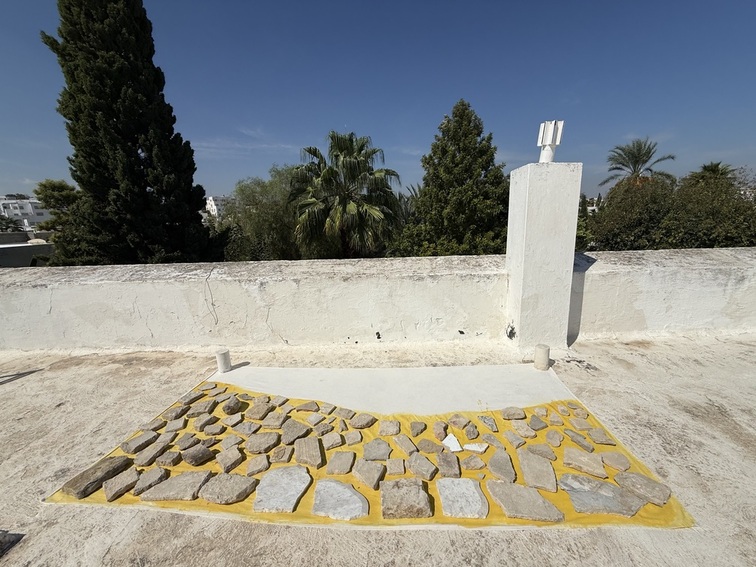
above: dramatically scaling things up - solution applied to a cotton sheet and rocks placed on top
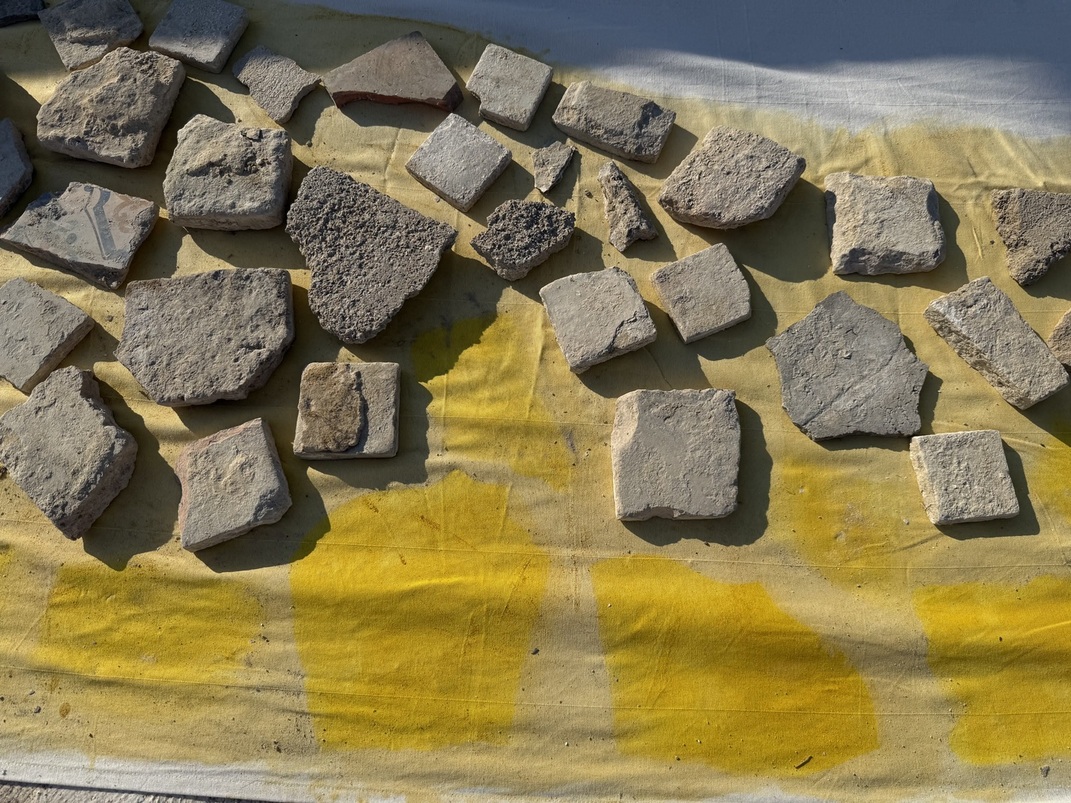
above: after 3 hours of exposure to the direct sunlight (about 28 degrees C)
above: the wet sheet after washing out the turmeric solution using Bicarbonate of Soda to act as an exposure stopper
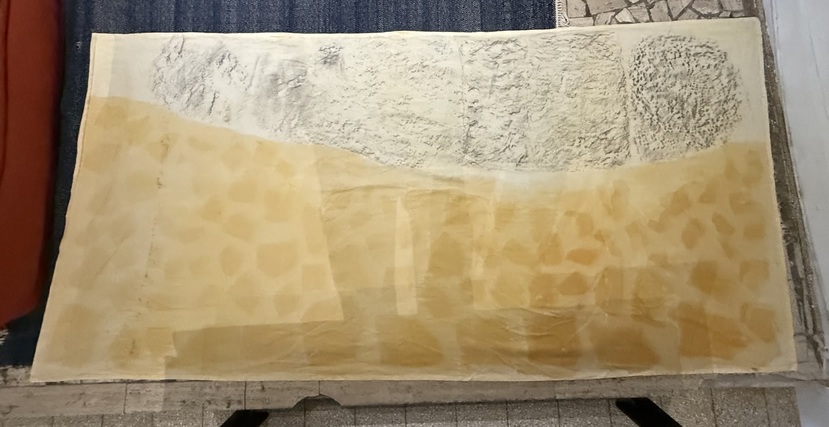
above: the final work after the sheet dried out and graphite rubbings were added
Continuing the exploration
The residency at Dar Meso provided the time and opportunity to explore these ideas through practical experimentation. Working with relatively simple materials — graphite, cotton, turmeric, alcohol and sunlight — allowed me to develop a process that was both immediate and open to discovery.
I am interested in how these techniques might be developed further, particularly in relation to the longevity and presentation of the resulting images. There is potential to bring the rubbings and sun prints together as a body of work, allowing their different visual languages to inform one another.
Ultimately, this project is an exploration of how we experience, record and reinterpret the places we encounter. It considers landscape not simply as something to be observed or represented, but as something that can be physically engaged with, extracted and transformed.
The works are fragments of place, carrying traces of their origins while becoming something new in their own right.

